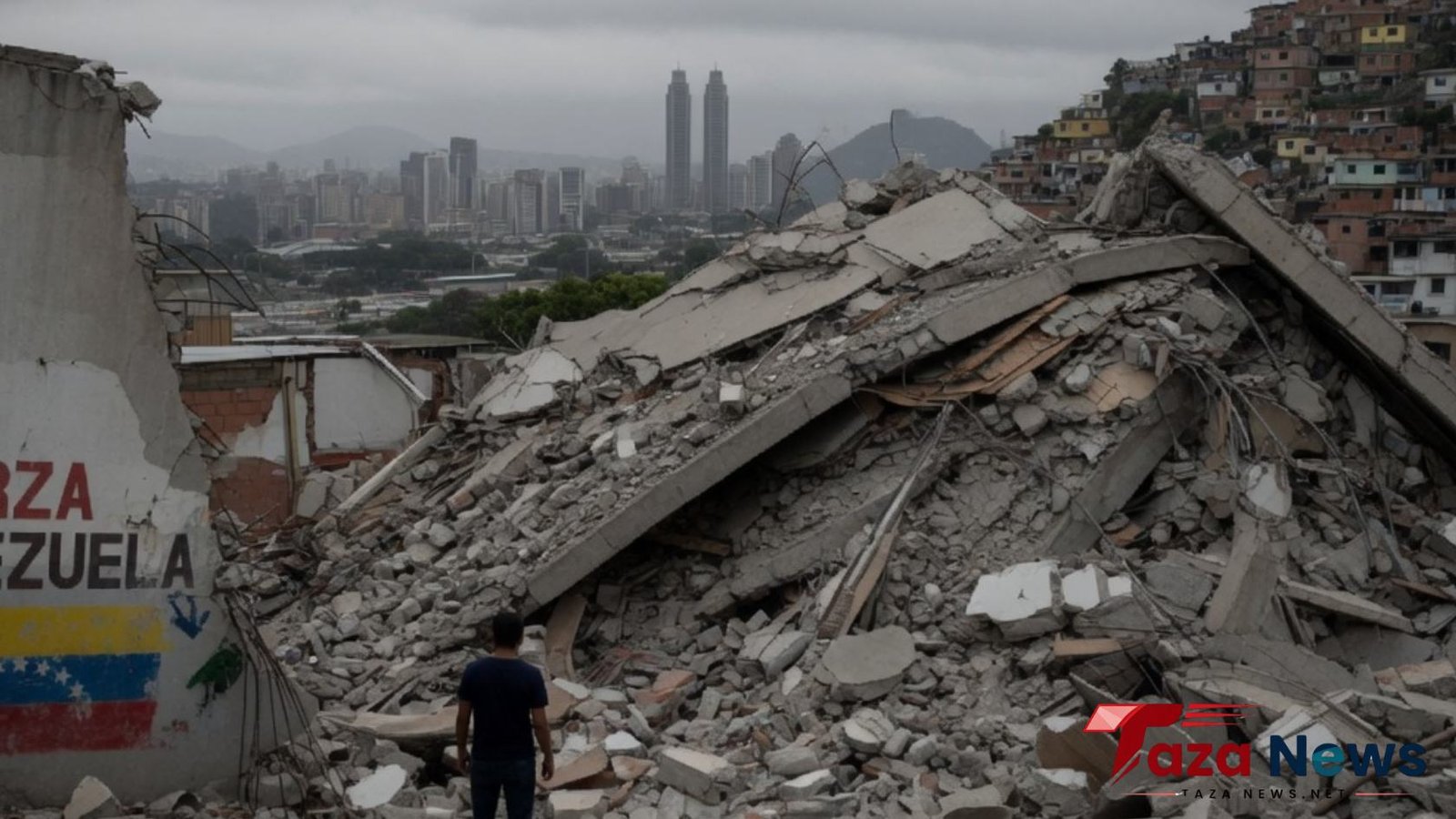
On the evening of June 24, 2026, Venezuela experienced one of the most significant seismic events in its modern history. Two powerful earthquakes struck in rapid succession near the northern coast, close to the capital Caracas. The first, registering a magnitude of 7.2, hit approximately 160 kilometers (about 100 miles) west of Caracas around 6:04 p.m. local time. Less than a minute later—reports vary between 39 and 45 seconds—a stronger 7.5 magnitude quake followed, centered near Yumare.
These “doublet” earthquakes, rare in their close timing and high intensity, unleashed widespread destruction across populous northern states, including La Guaira and areas around Caracas. As of June 25-26, 2026, official reports from Venezuelan authorities, including interim President Delcy Rodríguez and National Assembly President Jorge Rodríguez, indicate at least 164 to 188 confirmed deaths, with over 1,500 injuries. The toll is expected to rise significantly as rescue operations continue amid reports of thousands missing and hundreds potentially trapped under rubble. The U.S. Geological Survey (USGS) issued red alerts via its PAGER system, warning of high casualties and extensive damage probable. Predictive modeling suggested fatalities could reach into the thousands, with economic impacts potentially denting Venezuela’s GDP by up to 7%. The quakes were felt across the Caribbean, briefly triggering tsunami alerts for coastal areas in Venezuela, Aruba, Bonaire, Puerto Rico, and the Virgin Islands, though these were quickly canceled as no major waves materialized
The Immediate Impact: Scenes from the Ground
Eyewitness accounts paint a picture of chaos and terror. In Caracas, a city of around 5 million, residents described the ground shaking violently, buildings swaying, and objects crashing down. Videos circulating on social media and captured by journalists show people fleeing into streets, dust clouds rising from collapsing structures, and emergency workers scrambling over debris at night.
One particularly hard-hit area is La Guaira, home to Venezuela’s main airport (Maiquetía), which was closed due to structural damage. Dozens of buildings collapsed there, with residents reporting minimal initial government presence and taking rescue efforts into their own hands. Yorliana Colmenares, a local, described hearing taps from people trapped beneath rubble while searching for her boyfriend. Families searched frantically for children and loved ones; one couple looked for their eight-year-old son who had been playing basketball.
At Simón Bolívar International Airport, footage showed ceilings collapsing and passengers panicking as the shaking intensified. Former lawmaker Wilmer Azuaje captured dramatic moments of masonry falling. In residential neighborhoods, multi-story buildings pancaked, trapping occupants. An 80-year-old pensioner in southern Caracas compared it unfavorably to the 1967 magnitude 6.3 quake that also struck the region.
Power outages, disrupted communications, and aftershocks compounded the fear. Hospitals braced for an influx of injured, with staff doubling shifts. Classes were suspended nationwide for the week. Oil infrastructure, critical to Venezuela’s economy, appeared largely unaffected initially, though prolonged power losses could impact production.
Scientists noted amplifying factors: the quakes struck in a valley with loose sediments that intensify shaking, and many structures—especially in informal settlements on hillsides—are made of vulnerable unreinforced brick masonry or adobe. Venezuela lies in a seismically active zone at the boundary of the Caribbean and South American tectonic plates. Historically, a major 1812 quake killed an estimated 30,000.
Humanitarian and Rescue Efforts
A state of emergency was declared. Rescue teams from within Venezuela and internationally mobilized. The U.S. pledged assistance, with President Donald Trump stating the country was “ready, willing and able” to help and ordering agencies to act quickly. Rescue teams from Virginia and California, along with support from the Dominican Republic, El Salvador, Mexico, Qatar, China, Brazil, and others, began arriving.
Challenges are immense. Venezuela’s rescue services have been strained by years of economic difficulties, infrastructure decay, and emigration of skilled personnel. Residents in affected areas reported digging through rubble themselves with limited heavy equipment. A citizen platform tracking missing persons listed thousands unaccounted for shortly after the event.
International humanitarian agencies, including the UN, are assessing needs. Aid focuses on search-and-rescue, medical supplies, shelter, and food. The disaster exacerbates existing vulnerabilities in a nation still recovering from political transitions following the removal of longtime leader Nicolás Maduro in early 2026.
Broader Context: A Nation Under Strain
Venezuela’s earthquakes occur against a backdrop of complex political and economic realities. Following U.S. military action that led to Maduro’s removal in January 2026, Delcy Rodríguez assumed leadership with international backing but faces significant challenges. The country, rich in oil reserves, has endured a prolonged economic crisis marked by hyperinflation, mass emigration, and infrastructure deficits.
The quakes test this new alignment. U.S. officials, including Secretary of State Marco Rubio, emphasized humanitarian priorities while navigating sanctions frameworks with exemptions for aid. Reconstruction will require substantial resources, coordination, and addressing long-term vulnerabilities like building codes and emergency preparedness.
Geologically, this event highlights risks in the region. Seismologists continue monitoring aftershocks, which rattled the capital into the early hours. Public health concerns include disease outbreaks in crowded shelters and disrupted sanitation.
Global Reactions and Media Coverage
The story dominated international headlines on June 25-26. Outlets from Reuters, BBC, NYT, CNN, and Al Jazeera provided live updates, emphasizing the human stories amid the statistics. Social media amplified personal appeals from the Venezuelan diaspora searching for relatives.
World leaders expressed condolences and offered support. The event drew comparisons to other recent disasters, underscoring global seismic risks in populated areas with varying preparedness levels.
Scientific and Historical Perspective
Earthquake doublets like this are uncommon but documented; the proximity amplified energy release. USGS data detailed epicenters and intensities. Venezuela’s seismic history includes destructive events, but modern monitoring and urban growth change the risk profile. Experts stress the need for retrofitting buildings and public education on earthquake safety.
In the immediate aftermath, focus remains on life-saving efforts. As recovery begins, questions will arise about resilience, governance, and international solidarity.
Looking Ahead: Recovery and Resilience
The path to recovery will be long. Estimates suggest hundreds of buildings damaged or destroyed, particularly in La Guaira. Economic ripple effects could hinder oil production and broader stabilization efforts. Yet, moments of national unity and international cooperation may emerge.
For Venezuelans, both at home and abroad, the priority is mourning the lost, supporting the injured, and rebuilding lives. Stories of survival and community solidarity, such as neighbors helping dig out survivors or families reconnecting across distances, provide glimmers of hope amid the rubble.
This disaster serves as a stark reminder of nature’s power and the importance of preparedness, regardless of a nation’s political or economic circumstances. As rescue operations continue and the full scope becomes clearer, the world’s attention remains on Venezuela’s recovery.